
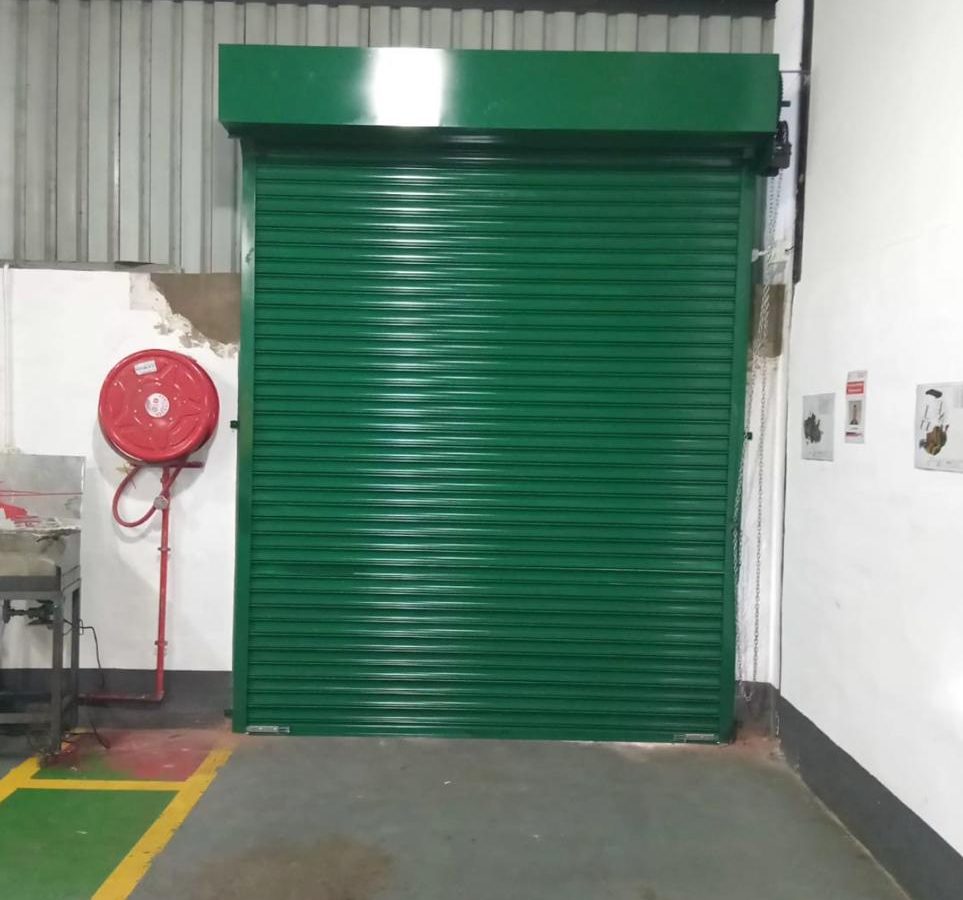
A powered door is a machine, and in a Sandton office block, retail centre or industrial unit it is a machine the public and your staff walk under every day. Inspections exist so that the first person to discover a failed safety edge is an inspector rather than a pedestrian, and so that you have a dated record when an insurer or a health and safety officer asks.
What a roller shutter door safety inspection covers
- Safety edge and photocell function tested under real conditions, not just powered up.
- Force settings checked, so the door reverses on an obstruction rather than driving through it.
- Springs, cables and drums assessed for remaining life and for the failure modes that drop a curtain.
- Manual release tested and confirmed reachable and operable by ordinary staff.
- Guides, brackets and fixings inspected for movement, corrosion and impact damage.
- Signage and controls checked, including that hold-to-run controls behave as intended where fitted.
Your roller shutter door compliance report
You get a written, dated report per opening, listing what was tested, what passed, what needs attention and what is urgent. It distinguishes between a defect that must be corrected now and wear that should be budgeted for. That distinction is what a Sandton facilities manager actually needs in order to plan, and it is what an insurer looks for after an incident.
Roller shutter door inspections for Sandton buildings
Openings shared by vehicles and pedestrians, which in Sandton means most basement ramps and goods entrances. High-cycle doors on the office towers around Maude and Fredman. Retail shutters that close over a public pavement. Fire-rated assemblies, where the certification only means something if the door still performs as certified.
Fire-rated roller shutter door inspections
A fire-rated shutter is only rated while it is maintained and its release mechanism works. We inspect the assembly and the release, and we are clear in the report about anything that would compromise the rating. We will not sign off a door we have not properly tested.
Correcting roller shutter door safety defects
We quote remedial work separately from the inspection, so the inspection is not a sales exercise. You are free to have the corrections done by anyone. If nothing needs doing, the report says so, and that is a perfectly good outcome.
Book a roller shutter door compliance inspection in Sandton
Inspections can run alongside a maintenance visit, which is cheaper than treating them as separate attendances. On multi-door Sandton buildings we survey and quote the whole site at once.
Common questions
About roller shutter door safety and compliance inspections
Powered doors are machinery. Insurers, health and safety officers and fire consultants increasingly want evidence that yours have been inspected and are operating within safe limits, and a verbal assurance from whoever last worked on them is not evidence.
Closing force measured against safe limits, safety edges and photocells tested, manual override and fail-safe operation checked, spring and drive condition assessed, and fixings and guides inspected. Everything is recorded, including anything that failed.
Yes. Fire-rated assemblies are life-safety components, so we test release from the building fire panel rather than just locally, and confirm gravity descent operates as designed.
You get a written report listing what failed and what it needs, priced separately. There is no obligation to have us do the remedial work — the report is yours either way.
Yes. We test safety edges, photocells, force settings, springs, cables and the manual release, and issue a dated written report per opening. Remedial work is quoted separately from the inspection so the inspection is not a sales exercise.
Related
Also worth a look
Roller Shutter Door Manufacturing
Made to spec sheets and architect details
We build to the detail, not around it. Finish, colour and closure speed are specified up front so the door matches what was approved…
Read more about Roller Shutter Door ManufacturingRoller Shutter Door Repairs
Basement, boom-house and shopfront doors
High-traffic basement doors here fail from cycling and from vehicles clipping the curtain. Both get repaired properly rather than patched until the next incident.
Read more about Roller Shutter Door RepairsRoller Shutter Door Service Contracts and Maintenance
SLA cover for buildings and estates
Contracts written for managed buildings: scheduled visits, response times you can quote to a tenant, and a report after every visit.
Read more about Roller Shutter Door Service Contracts and Maintenance