
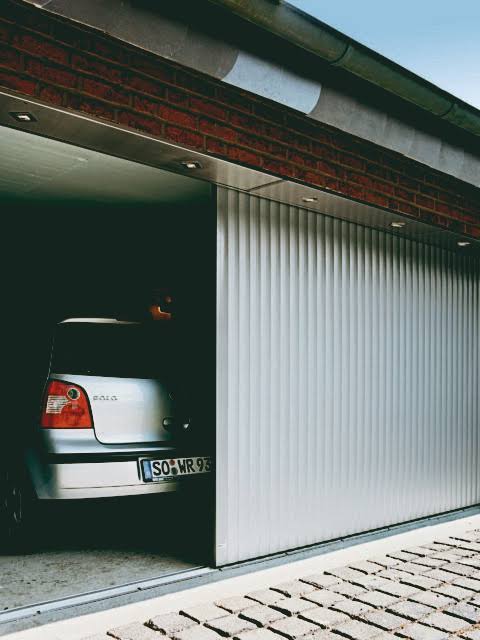
- Runs sideways along the wall
- Manual or motorised
- Suits low-roof and basement garages
Sliding garage doors run sideways on a track rather than lifting, which makes them the answer for a small number of Sandton garages where nothing else fits. Where the ceiling is unusable, where a beam crosses immediately behind the opening, or where the garage has an unusual shape, a side-sliding door solves a problem that lifting doors cannot.
When a sliding garage door is the right answer
- Garages with no usable ceiling space, including converted spaces and older outbuildings.
- Openings with structure immediately behind the lintel that rules out tracks or a roller box.
- Garages where partial opening is useful, since a sliding leaf can be opened part way for pedestrian access without operating the whole door.
- Wide openings where a single lifting leaf would be unmanageable.
What a sliding garage door needs from the garage
Clear wall alongside the opening for the leaf to slide onto. That is the constraint, and it is the reason we survey before recommending. If the wall is interrupted by a window, a downpipe or a boundary, a sliding door will not work and we will tell you at the survey rather than after the order.
Sliding garage doors and ground conditions
Sliding doors are sensitive to the floor. A driveway that falls across the opening, a cracked apron or a threshold that collects grit will all cause a sliding leaf to bind. We check the ground at survey and include any preparation in the quotation rather than raising it on installation day.
Security and sealing on sliding garage doors
A well-specified sliding door locks securely, but it seals less completely than a sectional and it has more exposed running gear than a roller shutter. On a Sandton property where the garage holds real value we will usually recommend a roller shutter in security gauge if the opening can take one, and we will explain why rather than simply quoting what was asked for.
Automating a sliding garage door
Sliding leaves can be automated with the correct operator and track. Safety edges matter more here than on most door types because the closing edge moves horizontally at chest height, so they are fitted as standard on automated installations.
Get a quote for a sliding garage door in Sandton
Free survey, itemised written quotation including any ground preparation, fixed price once approved, twelve-month workmanship warranty.
Common questions
About sliding garage doors
When there is no headroom at all and a wall to slide along. The door runs sideways on a track instead of lifting, so nothing occupies the ceiling. Common on converted garages, workshops and buildings with services running under the roof slab.
Roughly the width of the opening, alongside it, kept clear. On a wide opening we build the door in two leaves that part in the middle, which halves the space needed on each side.
Yes, with a sliding gate motor sized for the leaf weight. The track has to be kept clean for it to run reliably, so it suits a covered or paved approach better than an exposed one.
Debris in the bottom track and worn rollers, in that order. Both are cheap to put right if you catch them early; left alone, a door dragging on a fouled track will wear the track itself.
When the ceiling is unusable or there is structure immediately behind the lintel, and there is clear wall alongside the opening for the leaf to slide onto. That wall is the constraint, so we survey before recommending one rather than after.
Related
Also worth a look
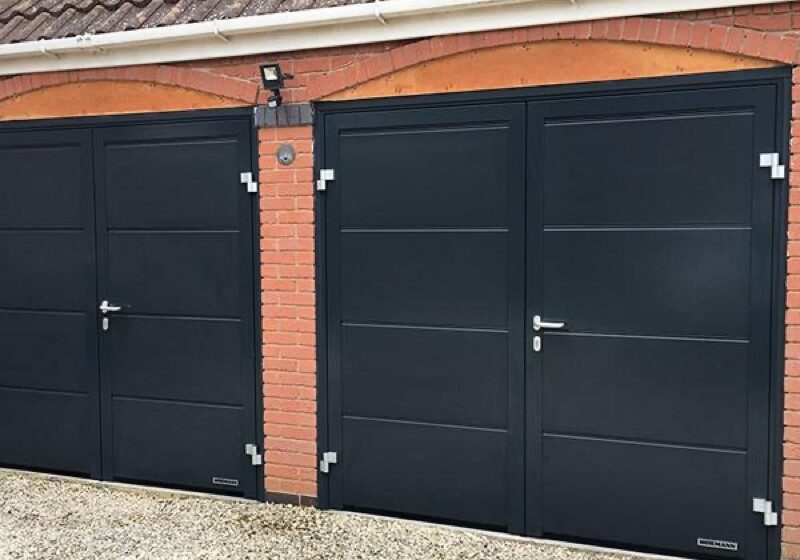
Side-Hinged Garage Doors
Two leaves, nothing overhead
Side-hinged garage doors swing outward on two leaves, like an oversized pair of gates. They suit workshops, storerooms and low garages where nothing can run overhead.
- Steel, timber or aluminium leaves
- Welded steel subframe, adjustable hinges
- No headroom required
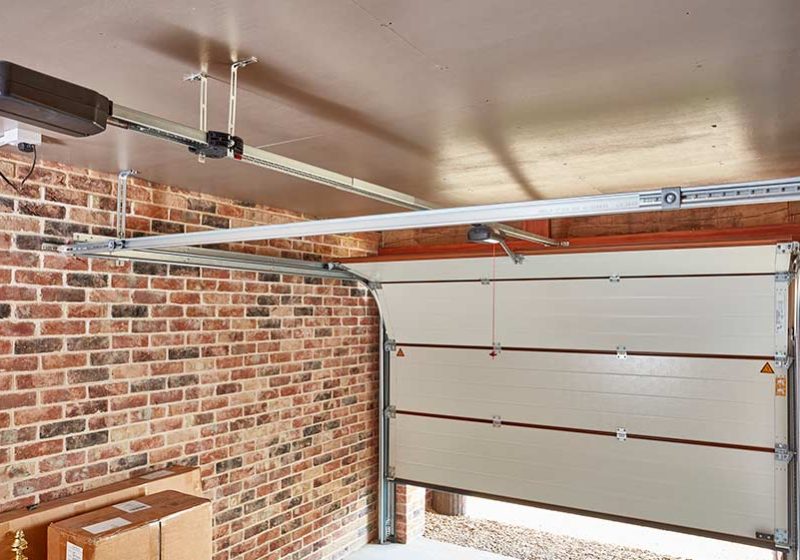
Sectional Garage Doors
Where headroom allows a panel stack
Sectional doors lift in hinged panels that stack flat against the ceiling. They seal better than any other garage door and run quietly enough not to…
- 40mm insulated panels
- Full perimeter weather seals
- Glazed panel options
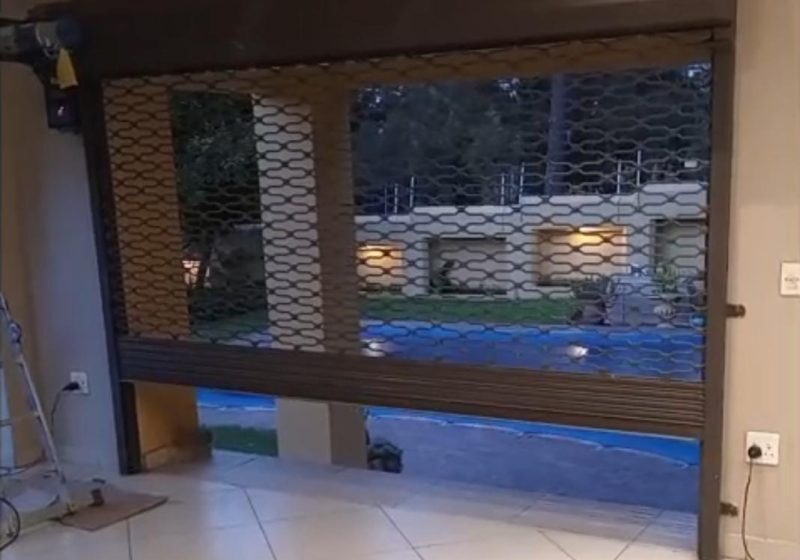
Perforated Roller Shutter Doors
Basement ventilation and retail display
Perforated curtains for basement bays that need airflow, and for shopfronts that stay visible after hours while the opening is secured.
- Punched galvanised slat, mixed options
- Openings to 6 000mm wide