
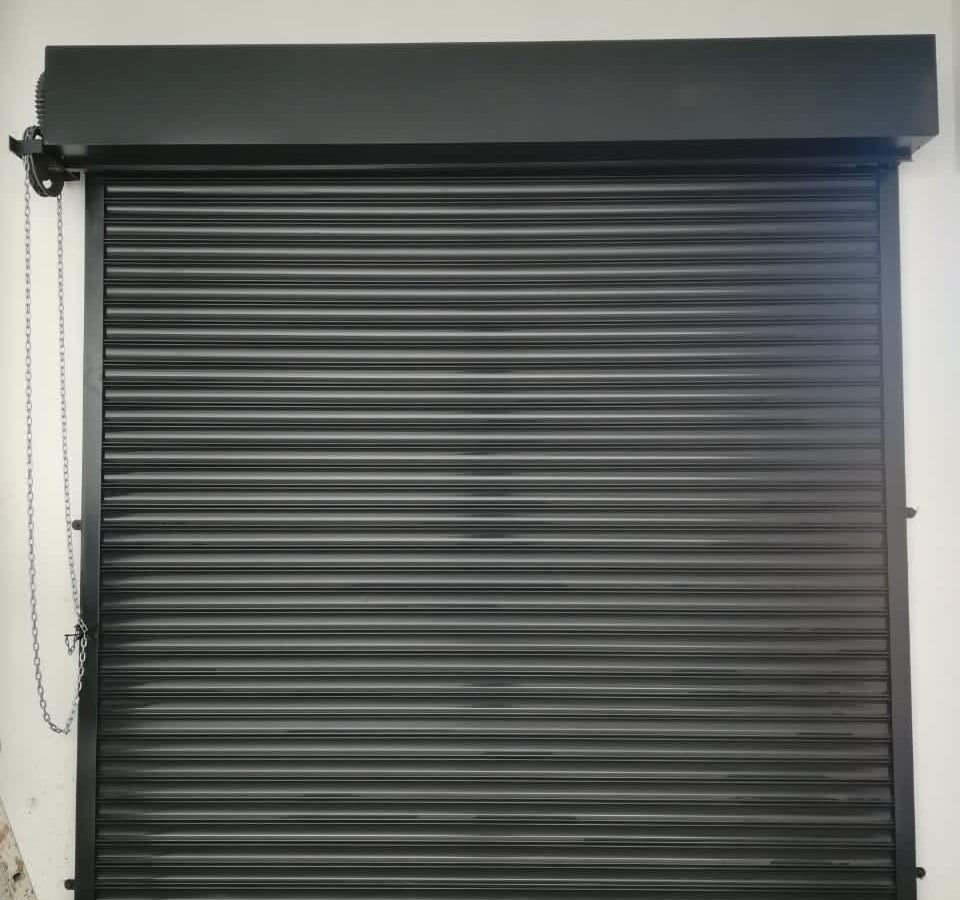
- Insulated aluminium or galvanised slat
- Openings to 5 000mm wide
- Remote and battery backup available
A roll-up door is the answer to the single most common garage problem in the older parts of Sandton: there is not enough ceiling room for a sectional door. The curtain rolls into a box directly above the opening instead of running back along the roof, so the garage interior stays clear and the structure is left alone.
When a roll-up garage door is the right choice
- Garages with low headroom or a beam close behind the opening.
- Garages used as workshops or storage, where ceiling tracks would be in the way.
- Narrow single garages on the older Sandton housing stock, where a sectional door is a poor fit.
- Properties wanting a security specification on the garage rather than a light panel door.
Measuring for a roll-up garage door
The measurement that decides everything is the clear headroom above the opening, and it is the one most often assumed rather than checked. We measure at the tightest point, along with side room and the floor across the threshold, and we tell you plainly at survey what will fit. Where headroom is very tight a low-profile build usually solves it.
How we build roll-up garage doors
Curtains are made to your measured opening at our own works, galvanised and powder coated to a colour agreed with you. Gauge is chosen for whether the door is primarily convenience or primarily security, and on a Sandton property that is a conversation worth having properly, because the garage is often the weakest opening on the house.
Roll-up garage door motors and backup power
Operator sized to the finished curtain weight, manual release fitted within reach, travel limits set so the door is not driven into the slab. Battery backup is quoted and rated in cycles. With a long driveway and an electric gate it is usually worth having; with easy pedestrian access it often is not.
Roll-up or sectional garage doors
If you have the headroom and you want the quietest, best-insulated door, a sectional is usually the better product and we will tell you so. If you do not have the headroom, or you want a security-gauge curtain, or you need the ceiling clear, the roll-up wins. We price both where both are viable.
Roll-up garage doors in Sandton estates
Many Sandton schemes specify door type and colour. Send us the rules with the enquiry so the quotation complies and nothing is built that has to be removed.
Get a quote for a roll-up garage door in Sandton
Free survey, itemised written quotation, fixed price once approved, twelve-month workmanship warranty.
Common questions
About roll-up garage doors
Very little — the curtain coils into a barrel just above the opening rather than running back along the ceiling. Around 300mm to 400mm above the lintel is usually enough. This is why roll-up doors are the answer in garages with beams, storage racking or a flat roof.
Older ones are. A modern galvanised curtain with nylon guide inserts and a soft start-and-stop motor is much quieter than the rattling doors people remember. Most of the noise complaints we are called out for turn out to be dry guides or a worn barrel bearing.
Not to the standard of an insulated sectional door, because the slats have to curl. We improve it with foam-filled slats and heavier perimeter sealing, which helps with dust and noise more than heat. If the garage is attached to living space, a sectional door is the better answer.
Curtains jumping out of the guides, worn barrel bearings, broken springs inside the barrel, and rust along the bottom rail where the door stands in driveway water. All four are repairable, usually in a single visit.
They are often the only workable option. A roll-up curtain rolls into a box above the opening instead of running back along the ceiling, so garages with low headroom or a beam behind the lintel are solved without altering the structure. We measure the clear headroom at the tightest point before recommending one.
Related
Also worth a look
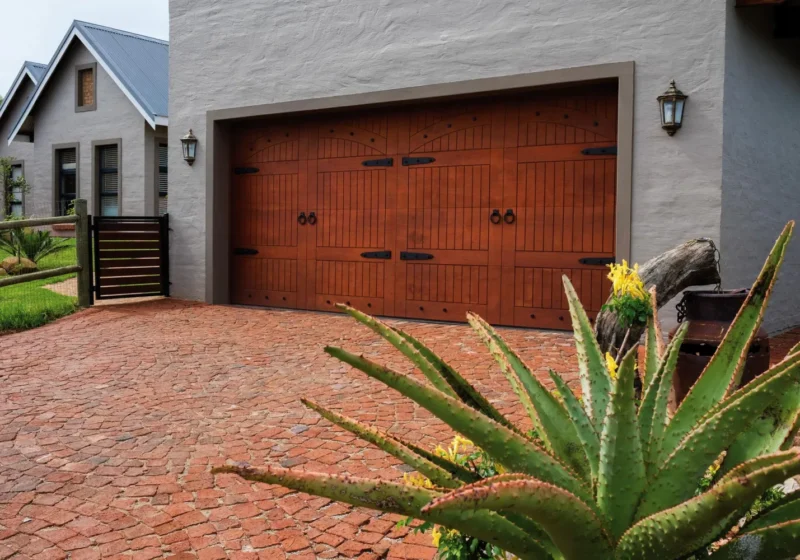
Wooden Garage Doors
Meranti, cedar and saligna
Meranti, cedar and saligna garage doors built on a galvanised steel frame and sealed on all six faces before they are hung. Tip-up or sectional, manual…
- Timber on a galvanised steel frame
- Sealed all six faces before hanging
- Tip-up or sectional mechanism
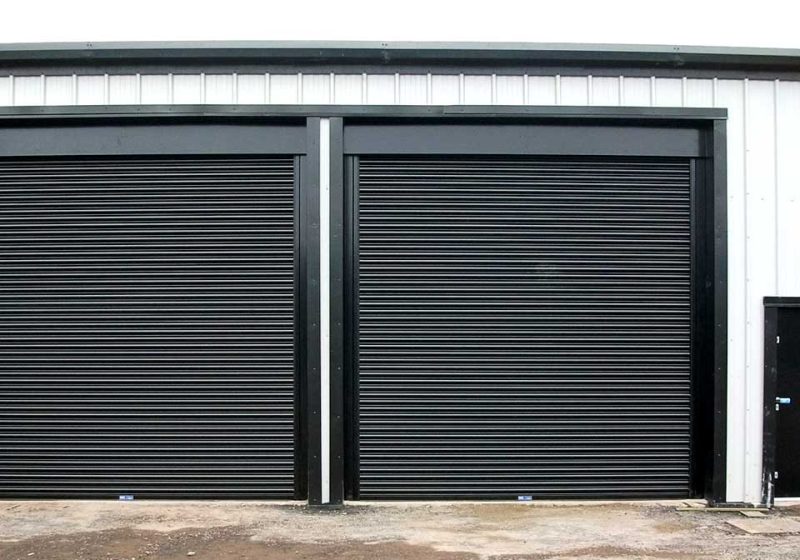
Industrial Roller Shutter Doors
Wynberg, Kramerville, service yards
Galvanised shutters for the workshops and service yards behind the CBD, built for daily vehicle access without spoiling a street frontage.
- Openings to 8 000mm wide
- 0.8mm–1.2mm galvanised slat
- Chain hoist or motorised
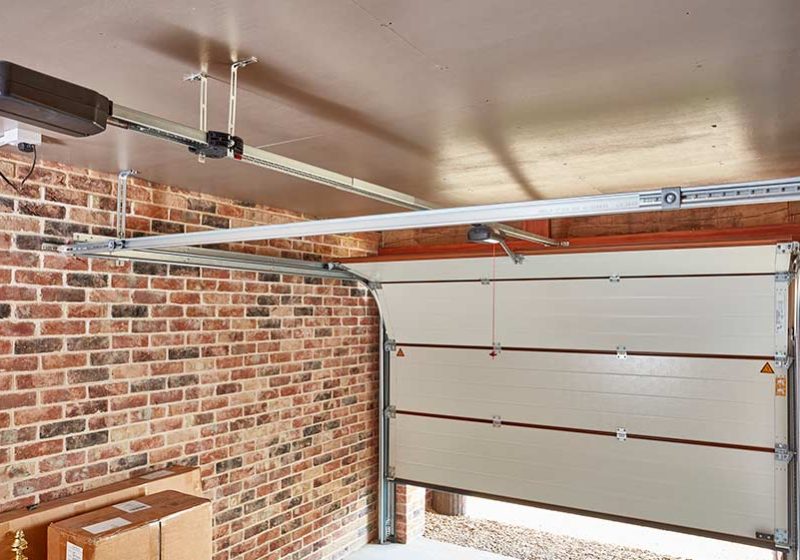
Sectional Garage Doors
Where headroom allows a panel stack
Sectional doors lift in hinged panels that stack flat against the ceiling. They seal better than any other garage door and run quietly enough not to…
- 40mm insulated panels
- Full perimeter weather seals
- Glazed panel options